
A fish pedicure is when a small fish is used to eat the dead and dry skin off the foot. Its not for the squeamish.
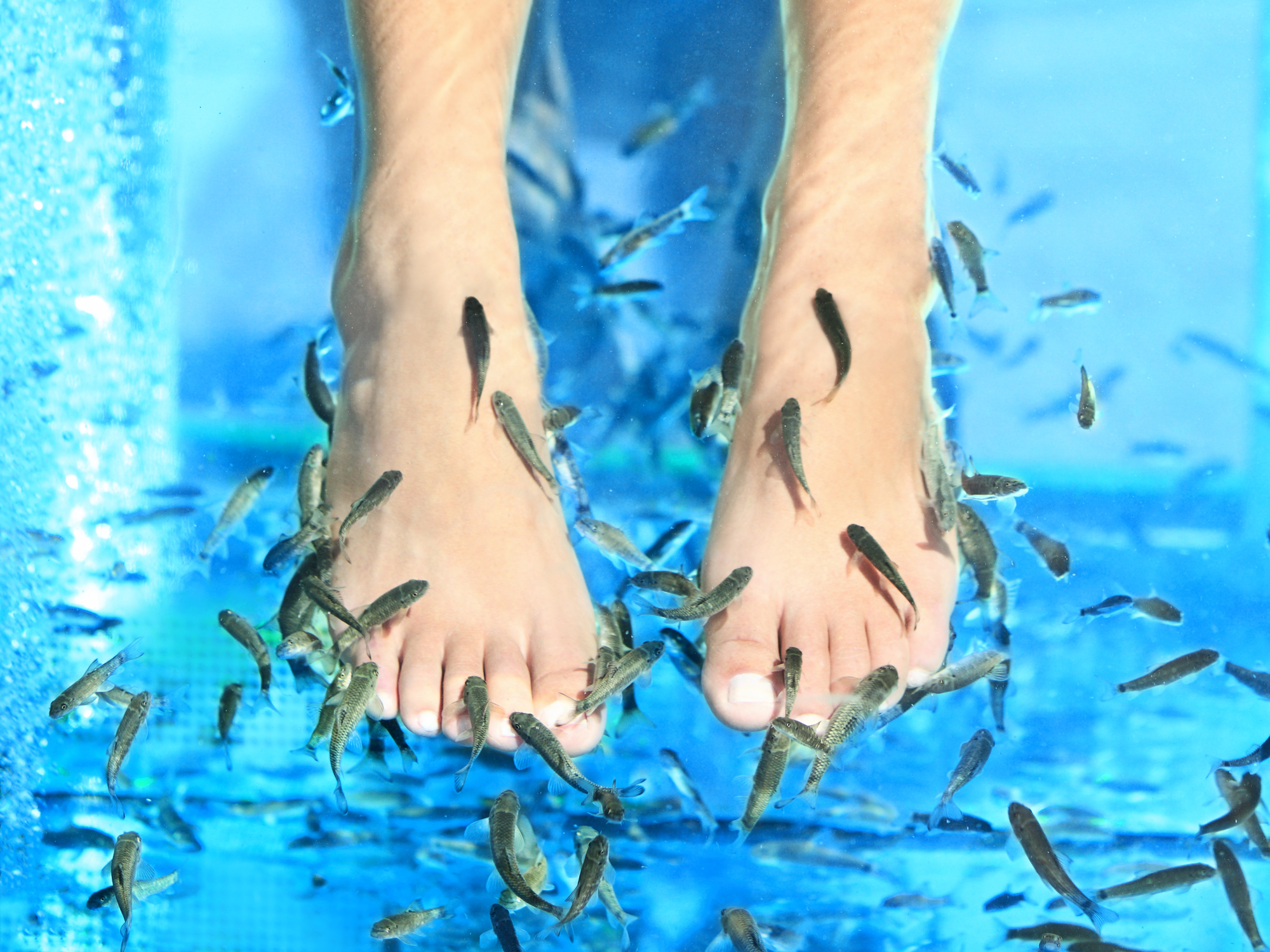
Fish can be used for a type of pedicure treatment known as a fish pedicure or fish spa. In this treatment, your feet are immersed in a basin or tank of water containing small fish, typically a species called Garra rufa, also known as doctor fish or nibble fish. These fish have a natural tendency to nibble on dead skin cells, and during the treatment, they gently nibble or suck on the skin, exfoliating the feet.
However, it is important to note that the use of fish for pedicures has raised some concerns regarding hygiene and safety. In many places, including certain countries and states, the practice has been banned or restricted due to potential health risks.
Hygiene concerns: Fish pedicures involve communal use of the same water and fish by multiple clients. This raises concerns about the potential transmission of infections or diseases if proper hygiene and disinfection protocols are not followed.
Infection risks: There have been reports of bacterial infections and skin problems associated with fish pedicures. The nibbling fish may carry bacteria or viruses from one person to another, increasing the risk of infections.
Allergies and sensitivities: Some individuals may have allergic reactions or sensitivities to the fish, the water, or the products used in the treatment. It is important to consider any existing skin conditions, allergies, or open wounds before undergoing a fish pedicure.
Alternative treatments: There are many other safe and effective methods available for foot exfoliation and pedicures. These include traditional exfoliation techniques, using scrubs, pumice stones, or electronic foot files, as well as seeking professional pedicures performed by trained and licensed practitioners in clean and sanitary environments.
Fish Pedicure FAQs
What is a fish pedicure?
A fish pedicure involves soaking your feet in a tank or basin of warm water containing small freshwater fish, typically Garra rufa (often called “doctor fish”). These toothless fish nibble at dead or thickened skin on the heels, soles, and toes. Sessions usually last 15–30 minutes. The practice originated from natural hot springs in Turkey and the Middle East, where the fish were observed feeding on skin, and later became a commercial spa treatment.
How does a fish pedicure work?
You rinse your feet, then immerse them in the tank. The Garra rufa swarm and gently suck or nibble loose dead skin. Because they lack teeth, they generally target softened or callused areas rather than healthy skin. The fish are often kept in a hungry state so they focus on skin rather than their preferred diet of algae, plankton, or plant matter. After the session, feet may feel smoother from the temporary exfoliation.
Does a fish pedicure hurt?
Most people describe the sensation as ticklish, tingling, or mildly prickly rather than painful. It is usually not painful because the fish are toothless. Stop the treatment immediately if you feel pain, stinging, or notice bleeding (which can occur if a different species is used by mistake or if the fish nibble too aggressively).
What are the claimed benefits?
People seek fish pedicures mainly for cosmetic exfoliation: softer-feeling feet, reduced surface calluses or rough patches, and a novel spa experience. Some limited studies (often in controlled medical settings rather than commercial spas) have explored use for psoriasis, with one reporting notable reduction in symptoms, but evidence is not strong enough to recommend it as a treatment, and safer alternatives exist. It does not replace regular foot care, moisturizing, or professional pedicures.
Are fish pedicures safe?
Safety is a major concern. The overall risk of infection for healthy people with intact skin is often described as low if hygiene standards are high, but it cannot be eliminated. Key issues include:
- Tanks and fish cannot be fully disinfected or sanitized between clients (fish are reused).
- Water can harbor bacteria from previous customers, fish waste, or the fish themselves.
- Documented concerns involve bacteria such as Staphylococcus (including MRSA), Mycobacterium, Aeromonas, Streptococcus agalactiae, and others.
- Rare but serious complications have included infections, nail problems (onychomadesis, where nails darken or fall off), and, in extreme cases abroad, severe outcomes.
Health authorities (including CDC commentary and UK public-health guidance) note the sanitation challenges. Many experts say the risks outweigh the cosmetic benefits compared with conventional exfoliation methods.
Who should avoid fish pedicures?
People with open cuts, sores, cracked skin, recent shaving or waxing, fungal infections, diabetes, poor circulation, neuropathy, compromised immune systems, psoriasis plaques (in uncontrolled settings), or other conditions that increase infection risk should avoid them. Pregnant people and those with certain skin conditions are often advised against it as well. Always disclose health issues to the spa and get a foot check beforehand.
Are fish pedicures legal?
They are banned or heavily restricted in many places due to sanitation and infection-control rules that live fish cannot meet. In the U.S., bans or prohibitions exist in states including California, Texas, New York, New Jersey, Washington, Florida, Maine, Massachusetts, New Hampshire, and others (the exact list has grown over time). They are also restricted or banned in Mexico, parts of Canada, and some European countries. Legality varies by location—check local regulations.
What fish are used, and are there ethical concerns?
The primary species is Garra rufa. Sometimes other species (such as “Chin Chin” fish that can develop teeth) are mislabeled or substituted, increasing injury risk. Ethical issues raised by animal-welfare groups include intentional starvation so the fish eat skin, stressful transport (many die in shipping), overcrowding, reuse, and potential overharvesting in native habitats. The fish are not naturally motivated to eat human skin when properly fed.
How much does a fish pedicure cost and how long does it last?
Costs typically range from about $30–$100 (or equivalent locally), depending on duration, location, and whether it’s combined with other spa services. Effects are temporary—similar to any light exfoliation—and last days to a couple of weeks depending on skin type, footwear, and aftercare. Frequency is not standardized; it is not recommended as a routine substitute for proper foot care.
Are there safer alternatives?
Yes. Conventional methods achieve similar or better results without the infection or ethical concerns: a professional pedicure with proper sterilization, at-home use of a pumice stone or foot file after soaking, chemical exfoliants (urea or lactic-acid creams for calluses), moisturizing, and proper footwear. For skin conditions like psoriasis, consult a dermatologist for evidence-based treatments.
Bottom line:
Fish pedicures offer a unique, ticklish experience and temporary smoothing for some people, but significant hygiene, infection, and animal-welfare concerns have led many health experts and regulators to discourage or ban them. Safer, more reliable foot-care options are widely available. If you still choose to try one where legal, select a reputable facility that screens clients, maintains clear water quality protocols, and inspects feet thoroughly—and skip it if you have any risk factors. Always prioritize verified health information over novelty trends.