
A LisFranc fracture is a particular fracture that affects the midfoot.
A Lisfranc fracture refers to an injury involving the midfoot, specifically the tarsometatarsal joint complex. It occurs when there is a fracture or dislocation of the bones that connect the metatarsal bones (the long bones leading to the toes) to the tarsal bones (the bones in the arch of the foot). This complex includes the first, second, and third cuneiform bones and the base of the second metatarsal bone.
Mechanism of Injury: Lisfranc fractures often result from high-energy trauma, such as motor vehicle accidents or sports injuries. They can also occur due to a sudden twisting or rotational force applied to the midfoot, such as during a fall or a misstep.
Signs and Symptoms: Common symptoms of a Lisfranc fracture include pain, swelling, and bruising on the top of the foot and midfoot. Walking or bearing weight on the affected foot may be difficult and painful. There may also be instability or a noticeable deformity in severe cases.
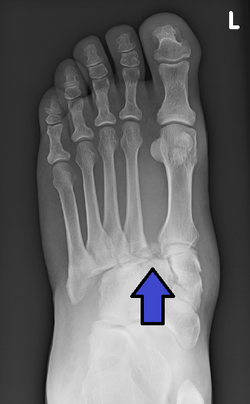
Types of Lisfranc Fractures: Lisfranc fractures can vary in severity, ranging from mild ligamentous sprains or fractures to complete dislocations or fractures involving multiple bones. These fractures can be classified into different types based on the specific location and pattern of the injury.
Diagnosis: A healthcare professional, typically an orthopedic specialist, will perform a physical examination and order imaging tests, such as X-rays, to confirm the diagnosis and assess the extent of the injury. In some cases, additional imaging studies like CT scans or MRIs may be required for a more detailed evaluation.
Treatment: Treatment for Lisfranc fractures depends on the severity of the injury. Non-surgical treatment may be appropriate for stable fractures or ligamentous injuries, and it typically involves immobilization with a cast or boot, rest, ice, and elevation (RICE therapy). However, surgical intervention is often necessary for more severe fractures or cases with significant instability. Surgery may involve realigning and fixing the fractured bones with screws, plates, or other hardware.
Rehabilitation and Recovery: Following treatment, a period of immobilization is usually required to allow the bones and soft tissues to heal. Physical therapy and rehabilitation exercises are then prescribed to restore strength, mobility, and function to the foot. The duration of recovery can vary depending on the severity of the injury and the individual’s healing process.
FAQs about a Lisfranc Fracture (Lisfranc Injury) in the Foot
A Lisfranc injury involves the midfoot (the tarsometatarsal joint complex), where the long metatarsal bones meet the smaller bones of the midfoot (cuneiforms and cuboid). It is named after French surgeon Jacques Lisfranc. These injuries range from ligament sprains to fractures, dislocations, or combinations, and they are relatively uncommon but often serious if missed or untreated.
1. What is a Lisfranc fracture/injury?
It is damage to the ligaments and/or bones in the midfoot joint complex (Lisfranc joint). This can include a pure ligament sprain/tear, a fracture of one or more midfoot bones, a dislocation (bones shifting out of place), or a combination. The key stabilizing structure is often the Lisfranc ligament, which connects the medial cuneiform to the base of the second metatarsal. These injuries make up a small percentage of all fractures (around 0.2%) but are important because they affect the stability of the foot’s arch.
2. What causes a Lisfranc injury?
Common causes include:
- Low-energy trauma: Twisting or falling with the foot pointed downward (plantarflexed), common in sports like football, soccer, or basketball (e.g., someone landing on the back of a planted foot).
- High-energy trauma: Falls from height, motor vehicle accidents, or crush injuries, which often cause more severe fractures and dislocations.
Any force that twists or compresses the midfoot while it is planted can cause it.
3. What are the symptoms?
Typical signs include:
- Pain and swelling on the top of the midfoot.
- Bruising on the top and especially the bottom (sole/arch) of the foot — plantar bruising is a strong clue.
- Pain that worsens with standing, walking, or pushing off the toes.
- Difficulty or inability to bear weight on the foot.
- Tenderness over the midfoot joints.
Symptoms can sometimes mimic a simple sprain, which is why these injuries are frequently missed initially.
4. How is a Lisfranc injury diagnosed?
Diagnosis starts with a history and physical exam. Imaging is essential:
- Weight-bearing X-rays of both feet (non-weight-bearing views often miss subtle injuries).
- CT scan for detailed bone alignment and fractures.
- MRI to evaluate ligaments, especially in subtle or purely ligamentous cases.
Up to 20% of these injuries can be missed on initial plain X-rays, so specialist evaluation is often needed if pain persists.
5. Do all Lisfranc injuries require surgery?
No. Treatment depends on stability and displacement:
- Stable injuries (no significant bone shift, ligaments mostly intact): Often treated non-surgically with a non-weight-bearing cast or boot for 6–8 weeks, followed by gradual weight-bearing and physical therapy.
- Unstable or displaced injuries (bones shifted, complete ligament tears, or fractures with displacement): Usually require surgery (open reduction and internal fixation with plates/screws, or sometimes joint fusion in severe cases) to restore alignment and stability.
Surgery aims to realign the bones and stabilize the midfoot.
6. How long does recovery take?
Recovery varies by severity and treatment:
- Mild/stable (non-surgical): Often 8–12 weeks or longer for basic healing; full return to activities may take several months.
- Surgical cases: Typically 6–12 weeks non-weight-bearing or protected weight-bearing in a boot/cast, then progressive rehab. Full recovery and return to sports/high-impact activity often takes 6 months to 1 year (sometimes longer).
Physical therapy is key for restoring strength, range of motion, balance, and gait. Residual swelling or mild discomfort can linger for a year or more in some people.
7. Can you walk on a Lisfranc injury?
Many people can still walk (with significant pain), especially with milder injuries, but this is not recommended. Walking on an unstable injury can worsen displacement, delay healing, and increase the risk of long-term problems like arthritis or arch collapse. Crutches or a knee scooter are commonly used during the non-weight-bearing phase.
8. What happens if a Lisfranc injury is left untreated or missed?
Untreated or poorly managed injuries can lead to chronic midfoot pain, instability, progressive arch collapse (flatfoot deformity), post-traumatic arthritis, and long-term functional limitations or disability. Early diagnosis and proper treatment significantly improve outcomes.
9. What is the long-term outlook?
With timely and appropriate treatment, many people regain good function and return to daily activities and sports. Outcomes are generally better when the injury is recognized early. Some residual stiffness, occasional pain, or need for orthotics is possible, especially after more severe injuries. Follow-up with a foot and ankle specialist is important.