Posts Tagged ‘ S is for ’

S is for Spikey Massage Ball

November 11, 2025

The Spikey massage ball is a generic firm ball that is rolled under the foot for a stimulating massage. The spiky ball delivers targeted mechanical pressure to plantar soft tissues, combining compression, shear, and proprioceptive input. Each nodule—typically 3–5 mm high—creates focal stress of 2–4 kg/cm², sufficient to deform fascia and trigger points without bruising. […]

Tags:
Posted in Uncategorized | No Comments »

S is for Shoe Stretchers

May 16, 2025
S is for Shoe Stretchers

Shoe stretchers are practical tools designed to adjust the fit of tight or ill-fitting shoes. They help expand the length, width, or specific areas of a shoe to relieve pressure points and improve comfort. Made from wood or durable plastic, most stretchers mimic the shape of a human foot and are inserted into the shoe, […]

Tags:
Posted in Uncategorized | No Comments »

S is for Slides

December 15, 2023

Slides are a type of causal footwear. They are called slides as they are easy to slide the foot in and out of. They are typically made to have a single strap that goes over the top of the foot. Slide sandals are a type of open-toe footwear characterized by a simple design featuring a […]

Tags:
Posted in Uncategorized | No Comments »

S is for Squamous cell carcinoma

August 26, 2023

Squamous cell carcinoma (SCC) of the skin is the second most common form of skin cancer, characterized by abnormal, accelerated growth of squamous cells. Squamous cell carcinoma (SCC) is a type of skin cancer that originates from squamous cells, which are flat, thin cells found in the outer layer of the skin (epidermis) and in […]

Tags:
Posted in Uncategorized | No Comments »

S is for Sagittal plane theory

July 20, 2023

Sagittal plane theory is a model of foot function initially articulated by Dr Howard Dananberg, DPM and is concerned with facilitating motion of the foot in the sagittal plane. Any number of different entities can restrict motion in the sagittal place and increase the risk for musculoskeletal conditions. For more, see:Sagittal Plane Theory and Plantar […]

Tags:
Posted in Uncategorized | No Comments »

S is for Saddle Bone Deformity

October 31, 2022

The ‘Saddle Bone Deformity’ is the lay terms that gets occasionally used to describe a dorsal metatarsocuneiform exostosis. Saddle bone deformity, also known as a metatarsal cuneiform exostosis, is a condition that affects the foot. It involves the formation of a bony prominence or bump on the top surface of the foot, specifically at the […]

Tags:
Posted in Uncategorized | No Comments »

S is for the Split Second Effect

July 3, 2022

The Split Second Effect is the sudden collapse of the midfoot in a slip second as the legs moves forward over the foot when the gastrocnemius is tight. A functional hallux limitus causes the same thing. The “Split Second Effect” also refers to a phenomenon in sports or other time-sensitive activities where a split second […]

Tags:
Posted in Uncategorized | No Comments »

S is for the Short Foot Exercise

January 19, 2017

The short foot exercise is an arch strengthening exercise that is commonly prescribed for flat or overpronated feet. The Short Foot Exercise is a foot strengthening exercise commonly used in rehabilitation and training programs. It aims to improve the stability, strength, and alignment of the foot muscles, particularly the intrinsic muscles of the foot. Benefits […]

Tags:
Posted in Uncategorized | No Comments »

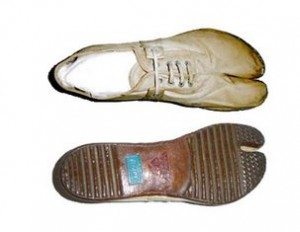
S is for Split Toe Shoes

December 2, 2013
S is for Split Toe Shoes

These Split Toe running shoe are making some what of a comeback in recent year after originally being popular in Japan. Several running shoe companies now make these shoe with pockets for one or more toes. Split toe shoes, also known as tabi shoes, are a type of footwear that originated in Japan. They are […]

Tags:
Posted in Uncategorized | No Comments »

S is for Stress Fractures

May 18, 2013

Stress fractures are small cracks that develop in bones when the cumulative load on the bone exceeds the ability of the bone to take the load. Stress fractures are small cracks or breaks in a bone that develop due to repetitive stress or overuse. They are typically caused by repetitive forceful activities that exceed the […]

Tags:
Posted in Uncategorized | No Comments »