
Adidas running shoes are one of the running shoe companies that has been around for a very long time.
Adidas is one of the world’s most recognisable sportswear brands and has played a major role in the development of modern running shoes. The company was founded in Germany in 1949 by Adolf “Adi” Dassler, who had previously manufactured athletic footwear with his brother Rudolf. Following a disagreement between the brothers, Rudolf established Puma, while Adi founded Adidas. From its earliest days, Adidas focused on producing innovative footwear designed to improve athletic performance. The company’s distinctive three-stripe design became internationally recognised, and its running shoes gained popularity among professional athletes and recreational runners. During the 1950s and 1960s, Adidas established itself as a leading manufacturer of track and field footwear, with its shoes worn by numerous Olympic competitors. The brand continued to expand throughout the following decades, becoming a major influence in the global running shoe industry.
During the 1970s and 1980s, Adidas introduced several influential running shoes that helped establish its reputation for performance and innovation. One of its most famous models was the Adidas SL 72, introduced for the 1972 Munich Olympic Games. This lightweight running shoe featured a nylon upper and suede reinforcements, making it suitable for training and everyday running. Another significant development was the Adidas Marathon TR, introduced in 1979, which became popular among runners seeking durable footwear for varied terrain. Adidas also developed advanced cushioning systems, including its Dellinger Web technology, designed to distribute impact forces across the sole. The company became closely associated with distance running, particularly through its sponsorship of elite marathon runners and international athletics competitions. Although Adidas faced increasing competition from Nike, ASICS and other manufacturers, it remained an important name in performance running footwear.
A major turning point in Adidas running shoe technology came in 2013 with the introduction of Boost cushioning, developed in partnership with the German chemical company BASF. Unlike traditional EVA foam midsoles, Boost used expanded thermoplastic polyurethane particles fused together to create a cushioning system that offered softness, durability and excellent energy return. The technology became particularly popular through the Adidas Energy Boost and UltraBoost running shoes, the latter introduced in 2015. UltraBoost combined responsive cushioning with a flexible Primeknit upper and became successful as both a performance running shoe and a fashionable everyday sneaker. Adidas subsequently developed other innovations, including Lightstrike and Lightstrike Pro foams, designed to provide lightweight cushioning for faster running. The company’s Adizero range also became increasingly important, featuring racing shoes such as the Adizero Adios Pro, which incorporated carbon-infused EnergyRods to improve running efficiency. These developments helped Adidas compete in the rapidly evolving market for high-performance marathon racing shoes.
Today, Adidas produces a broad range of running shoes designed for different abilities, running styles and distances. The Adizero collection focuses primarily on speed and competition, with models designed for everything from fast training sessions to elite marathon racing. The Supernova range is aimed at everyday runners seeking comfortable cushioning and reliable performance, while the Ultraboost collection combines plush cushioning, responsiveness and versatility for regular training and casual wear. Adidas has also developed trail running footwear through its Terrex range, offering enhanced traction, protection and stability for runners tackling uneven terrain. The brand has enjoyed considerable success in elite distance running, with athletes wearing Adidas shoes achieving major marathon victories and world records. Ethiopian runner Tigst Assefa, for example, wore Adidas Adizero Adios Pro Evo 1 shoes when she set a women’s marathon world record of 2:11:53 at the 2023 Berlin Marathon, a record subsequently surpassed. With its long history of innovation, strong connections to competitive athletics and continued investment in advanced footwear technology, Adidas remains one of the world’s leading running shoe manufacturers.
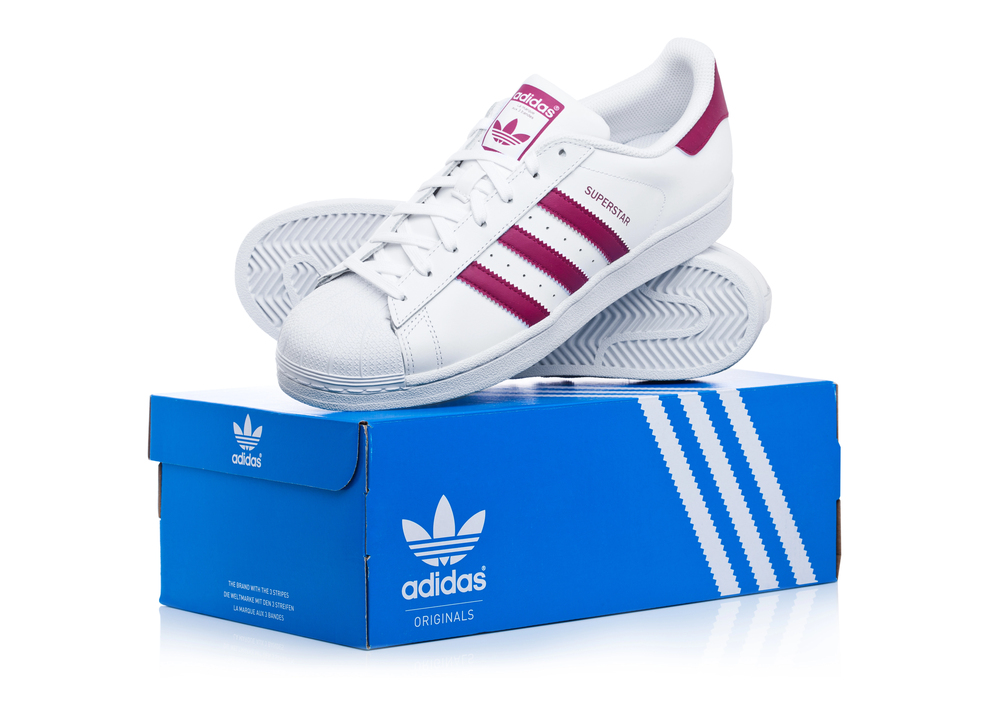
Adidas running shoes FAQ’s:
1. Do Adidas running shoes run true to size, big, or small?
Most Adidas running models (especially the Adizero and Supernova lines) tend to run about a half size small. Many runners size up half a size for a more comfortable fit, particularly since feet swell on longer runs. Lifestyle models (like Superstar or Samba) are closer to true-to-size. Fit can vary by specific model and upper construction (sock-like knits often feel different from traditional mesh), so checking reviews for the exact shoe or trying them on is recommended.
2. How long do Adidas running shoes last / when should I replace them?
A general guideline is every 300–500 miles (roughly 500–800 km), or about every 4–6 months for someone averaging 20 miles per week. The midsole foam compresses and loses cushioning/energy return before the upper or outsole fully wears out. Higher-mileage or heavier runners may need to replace sooner; rotating multiple pairs can extend life.
3. What’s the difference between the main Adidas running lines (Adizero, Supernova, Ultraboost/Hyperboost, etc.)?
- Adizero: Light, fast, performance-oriented (racing and speed training). Features Lightstrike Pro foam; many have EnergyRods or EnergyRim (carbon elements) for propulsion. Examples: Adios Pro series (marathon racing), Boston (tempo/workouts), Evo SL (versatile daily trainer with race foam), Takumi Sen (shorter races).
- Supernova: Comfortable daily trainers for easy runs, long runs, and beginners. Good cushioning and stability options (e.g., Supernova Rise, Prima, Solution for overpronators).
- Ultraboost / Hyperboost: Plush, highly cushioned shoes with Boost or newer Hyperboost/Light Boost foams. Great for comfort, recovery, easy miles, and sometimes lifestyle wear. Hyperboost Edge/Run offer more modern, bouncy max-cushion options.
- Other lines (e.g., Adistar) focus on max cushioning for high-mileage or heavier runners.
4. Which Adidas running shoes are best for beginners?
Comfortable, stable daily trainers work best. Popular recommendations include the Supernova Rise (cushioned, approachable, good for building mileage) or more budget-friendly options like the Duramo Speed. Avoid aggressive race shoes (like Adios Pro) until you have more experience and consistent form. If you overpronate, look at stability models such as the Supernova Solution.
5. What are the best Adidas shoes for racing a marathon or half marathon?
The Adizero Adios Pro series (current Pro 5 or recent Pro 4) is the primary marathon/half-marathon race shoe, featuring Lightstrike Pro foam and carbon elements (EnergyRods or newer EnergyRim) for energy return and propulsion. The elite-level Adios Pro Evo models are even lighter/faster but more expensive and less durable for high volume. For training toward a race, the Boston or Evo SL are strong supporting options.
6. Are Adidas running shoes good for daily training / long runs?
Yes. Strong daily/long-run choices include:
- Adizero Evo SL or Boston (lighter, more responsive)
- Supernova Rise or Prima (comfort-focused)
- Hyperboost Edge or Run / Ultraboost (max cushion and bounce)
Match the shoe to your pace preferences and mileage. Many runners rotate a cushioned daily trainer with a faster shoe.
7. What is Boost / Lightstrike Pro foam, and why does it matter?
- Boost / Light Boost: Adidas’s classic TPU bead foam known for soft, durable cushioning and energy return. Signature of the Ultraboost line; still excellent for comfort.
- Lightstrike Pro (and variants like Hyperboost Pro or Dreamstrike+): Newer, lighter, highly responsive foams used in performance shoes. They provide better energy return and a livelier feel, especially in race and speed models.
Foam choice heavily influences ride feel (plush vs. propulsive), weight, and intended use.
8. How should Adidas running shoes fit?
Aim for a secure midfoot and heel lockdown with a bit of room (roughly a thumb’s width) in the toebox for foot splay and swelling. The upper should not pinch or create hot spots. Many models have adaptive knits or engineered mesh. Try different lacing techniques if needed, and wear the socks you plan to run in. Width options are limited on many models, so wide-footed runners should research specific fits carefully.
9. Do Adidas running shoes offer good stability or support for overpronation?
Most Adidas running shoes are neutral. For mild-to-moderate overpronation or those wanting more guidance, look at models like the Supernova Solution (stability version) or certain Adistar shoes. Pure max-cushion neutral shoes can also feel stable due to wider platforms and higher stack heights. Severe overpronators may still prefer dedicated stability shoes from other brands or consult a gait analysis.
10. Are Adidas running shoes durable and good value?
Outsoles (often with Continental rubber) generally hold up well. Midsole durability varies—premium race foams can compress faster under high mileage than denser daily-trainer compounds. Value is strong in models like the Evo SL (race foam at a more accessible price) or Supernova daily trainers. Elite race shoes (Adios Pro Evo) prioritize performance over longevity. Regular cleaning, rotating pairs, and replacing at the recommended mileage help maximize lifespan.