
Asics running shoes are probably the most popular running shoe with runners today.
Asics is a well-known brand in the running shoe industry, and their shoes have gained popularity among runners for several reasons.
ASICS running shoe characteristics:
Comfort: Asics prioritizes comfort in their shoe designs. They incorporate cushioning technologies and materials that provide a plush and comfortable feel. The cushioning helps absorb impact and reduce stress on joints, making them suitable for long-distance running and daily training.
Support and Stability: Many Asics running shoes are known for their stability features. They often incorporate medial support systems, such as dual-density midsoles or firmer foam in the arch area, to help correct overpronation (excessive inward rolling of the foot) and provide a more stable running experience. This can be beneficial for runners who need additional support or have flat feet.
Gel Cushioning: Asics is particularly recognized for their Gel cushioning technology. Gel units are strategically placed in the midsole or heel area to enhance shock absorption and provide extra cushioning during impact. The Gel technology helps distribute forces and reduce the risk of injuries, such as stress fractures.
Fit and Durability: Asics running shoes are known for their precise fit and durability. They often incorporate engineered mesh or other breathable materials in the upper to provide a secure and comfortable fit. The shoes are designed to withstand the rigors of running, ensuring longevity and resilience.
Variety of Models: Asics offers a wide range of running shoe models to cater to different running styles, foot types, and preferences. They have options for neutral runners, overpronators, and those seeking lightweight, responsive shoes. This variety allows runners to find the right shoe that suits their specific needs.
Research and Development: Asics invests in research and development to continuously improve their shoe technologies and designs. They work closely with athletes and professionals to gather feedback and insights, resulting in ongoing advancements in their running shoe offerings.
It’s important to note that every runner has unique needs and preferences, and what works for one person may not work for another. Finding the right running shoe involves considering factors such as foot type, running style, and individual comfort. It’s recommended to try on different shoe models and consult with experts at specialty running stores to determine the best fit and support for your specific needs.
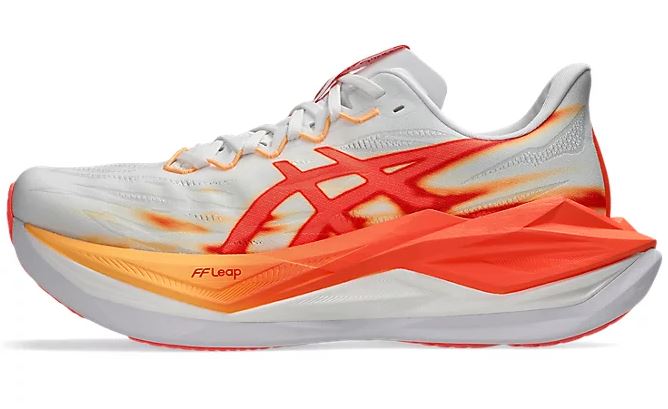
ASICS Running Shoes FAQ
1. How do I choose the right ASICS running shoe for me?
The best shoe depends mainly on your pronation type, running goals, and preferred cushioning level.
- Neutral runners (or mild underpronators): Look at the GEL-Nimbus (maximum cushion for long runs) or GEL-Cumulus (versatile daily trainer).
- Overpronators (feet roll inward excessively): Choose stability shoes like the GEL-Kayano (premium support + plush cushion) or GT-2000 (lighter, more energetic stability).
- Other options include the Novablast for energetic bounce and trail models for off-road running.
ASICS recommends getting a gait analysis or using their shoe finder tools for the best match.
2. Do ASICS running shoes fit true to size?
Most ASICS running shoes fit true to size or slightly roomy in the forefoot. Many runners (and ASICS guidance) recommend going half a size up from your everyday shoe size to allow for foot swelling during runs. Leave about a thumb’s width of space in the toe box.
Try shoes on in the afternoon with your usual running socks. Wide and extra-wide options are available on many popular models (especially Nimbus, Kayano, and GT-2000). Fit can vary slightly by model—Nimbus often feels more spacious, while some Kayanos can feel more structured in the midfoot.
3. What is pronation and why does it matter for ASICS shoes?
Pronation is the natural inward roll of your foot as it hits the ground.
- Neutral pronation: Balanced roll → cushioned neutral shoes (Nimbus, Cumulus).
- Overpronation: Excessive inward roll → stability shoes with guidance features (Kayano, GT-2000).
- Underpronation (supination): Insufficient inward roll → cushioned shoes that allow natural movement.
Choosing the wrong category can increase injury risk or reduce comfort. ASICS stability shoes use systems like 4D Guidance to help control excessive rolling without feeling overly rigid.
4. How long do ASICS running shoes last?
A general guideline is 300–500 miles (roughly 480–800 km), depending on your weight, running style, surface, and how hard you land. Road running and heavier overpronation tend to wear shoes faster.
Signs it’s time to replace them include:
- Visible wear through the outsole rubber
- Midsole that feels flattened or collapses easily
- Increased muscle soreness or joint discomfort after runs
- Shoes that no longer sit flat when placed on a hard surface
Rotating between two pairs can extend the life of each.
5. What’s the difference between GEL-Nimbus and GEL-Kayano?
| Feature | GEL-Nimbus | GEL-Kayano |
|---|---|---|
| Type | Neutral / max cushion | Stability |
| Best for | Neutral runners, long easy runs | Overpronators needing guidance |
| Feel | Very plush, soft landings | Plush but more structured and supportive |
| Key tech | PureGEL + high-stack foam | 4D Guidance System + similar cushioning |
Both are premium daily trainers with excellent comfort. Choose Nimbus if you want pure softness; choose Kayano if you need extra support against overpronation.
6. Can I wash my ASICS running shoes?
Yes, but carefully. Wipe them with a damp cloth and mild soap after runs. For deeper cleaning, remove the insoles and laces, hand-wash with cold water and a soft brush or mild detergent, then air-dry away from direct heat or sunlight. Never put them in a washing machine or dryer—this can damage the midsole foam and glue.
7. What are the main ASICS technologies in running shoes?
- GEL / PureGEL: Shock absorption in the heel (and sometimes forefoot) for smoother landings.
- FlyteFoam / FF BLAST / FF BLAST MAX / FF LUXE: Lightweight foams that provide cushioning and energy return.
- 4D Guidance System (Kayano): Dynamic support that guides the foot through the gait cycle.
- ASICSGRIP outsole: Durable rubber for traction on wet or dry roads.
Newer models continue to refine these for better softness, responsiveness, and durability.
8. Are ASICS good for beginners?
Yes. Beginner-friendly options include the GEL-Cumulus (neutral), GT-1000 or GT-2000 (mild stability), and Novablast (fun, energetic feel). These offer solid cushioning and support without being overly specialized or expensive. A proper fit and gradual increase in mileage matter more than the specific model.
9. Do ASICS offer wide widths?
Yes. Many core models (Nimbus, Kayano, Cumulus, GT-2000, etc.) come in 2E (wide) and sometimes 4E (extra-wide) for men, with corresponding women’s wide options. Choosing the correct width is often better than sizing up in length if you have broad feet.
10. Should I rotate multiple pairs of running shoes?
Yes, if possible. Alternating between two or more pairs lets the midsole foam recover between runs, can reduce overall wear, and may lower injury risk by varying the stresses on your body.