
Kinesio taping is a method of taping that become popular at the Olympics due to the bright nature of the colored tape.
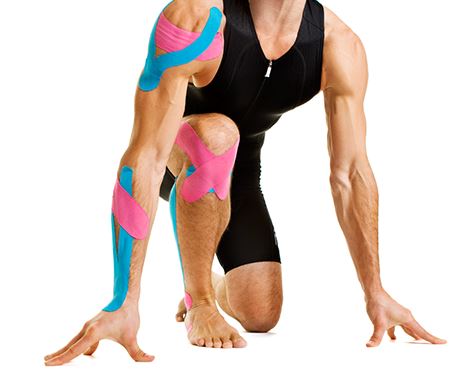
Kinesio taping is a technique that involves the application of a specialized elastic tape to provide support and facilitate movement in the body. It is commonly used in sports and rehabilitation settings. While some individuals report positive effects from Kinesio taping, the scientific evidence regarding its effectiveness is limited and mixed.
Pain Relief: This aping is often used to provide pain relief and support for injured or overused muscles and joints. Some studies suggest that Kinesio taping may help reduce pain and improve function in certain conditions, such as musculoskeletal injuries, postoperative rehabilitation, and some types of chronic pain. However, the evidence is not conclusive, and more research is needed to establish its effectiveness.
Support and Stability: Kinesio tape is designed to provide support and stability to muscles and joints without restricting movement. It is believed to improve proprioception (the body’s awareness of its position in space) and enhance muscle activation. This can be beneficial for athletes or individuals recovering from injuries. However, the evidence regarding the actual biomechanical effects and long-term benefits of Kinesio taping is limited.
Swelling and Lymphatic Drainage: The unique properties of this type of tape, such as its elasticity and specific application techniques, are thought to aid in reducing swelling and improving lymphatic drainage. This can be relevant in conditions where swelling or lymphatic congestion is present. However, more high-quality studies are needed to determine its effectiveness in this regard.
Placebo Effect: It is important to consider the potential placebo effect of Kinesio taping. The act of applying the tape and the expectation of experiencing positive outcomes may contribute to perceived improvements in pain and function. This highlights the need for well-designed studies with appropriate control groups to better understand the true effects of Kinesio taping.
FAQ’s on Kinesio Taping:
What is kinesio/kinesiology tape and how does it work?
It is a stretchy, breathable tape (typically cotton or a cotton/synthetic blend with acrylic adhesive) that mimics the elasticity of skin and muscle. When applied with specific tension and direction, it is intended to:
- Provide gentle support to muscles and joints
- Reduce pain perception (via sensory/proprioceptive input)
- Help decrease swelling or improve local circulation/lymphatic flow by creating microscopic lifts in the skin
- Support recovery without restricting movement
Evidence for benefits is mixed and generally modest (mainly short-term pain relief while the tape is worn). It works best as a complement to proper assessment, exercise, and rehabilitation rather than a standalone cure.
How is it different from regular athletic (rigid) tape?
- Kinesio tape: Elastic, allows full or near-full range of motion, wearable for several days, water-resistant, focused on support, pain relief, and circulation/proprioception.
- Athletic tape: Non-elastic/rigid, restricts joint movement for mechanical stability (e.g., acute ankle sprain protection), typically used for short periods (a game or session), not designed for multi-day wear or water exposure.
They serve different purposes and are not interchangeable.
What conditions or issues is it commonly used for?
It is frequently applied for musculoskeletal concerns such as:
- Muscle strains, overuse injuries, or fatigue
- Joint pain (e.g., knee osteoarthritis, runner’s knee, shoulder issues)
- Tendinopathies (tennis elbow, Achilles issues)
- Plantar fasciitis, shin splints
- Swelling/edema, postural support, lower back or neck tension
- Support during recovery from sports injuries or mild arthritis symptoms
Results vary; consult a qualified clinician (physiotherapist, athletic trainer, etc.) for proper assessment and technique.
How do I apply kinesiology tape?
General principles (technique varies by body part and goal):
- Clean and thoroughly dry the skin (no lotions, oils, or sweat). Trim excess hair if needed for better adhesion.
- Round the corners of the tape strips to reduce peeling.
- Apply anchors (first and last few centimetres/inches) with zero stretch.
- Apply the middle “working” portion with light-to-moderate tension (often 10–50% of the tape’s stretch capacity, depending on the goal—less for support/decompression, slightly more for proprioceptive cueing). Avoid excessive stretch.
- Rub the tape firmly after application to activate the heat-sensitive adhesive.
- Apply with the target muscle/joint in a stretched position when appropriate.
Many brands offer pre-cut strips and illustrated guides. For best results—especially the first time—have a trained professional demonstrate the correct pattern and tension for your specific issue. Self-application is possible for simple areas once taught.
How long can I wear it? Can I shower, swim, or exercise with it on?
Most applications last 3–5 days (sometimes up to 5–7 with good skin prep), depending on location, activity level, and sweat/friction. High-movement or high-sweat areas (feet, knees) may last less.
Yes—it is water-resistant. You can shower, swim, or sweat with it on. After getting wet, gently pat it dry (do not rub vigorously or use a hair dryer on high heat). Allow the adhesive to fully bond for about 30–60 minutes before intense activity or water exposure if possible.
How do I remove the tape safely?
- Do not rip it off.
- Remove slowly in the direction of hair growth.
- Press down on the skin with one hand while peeling the tape back on itself with the other.
- Apply oil (baby oil, olive oil, or lotion) or soak in warm water to loosen the adhesive if needed.
- Avoid removing during a hot shower (heat can make adhesive stickier).
Give skin a rest day or so before reapplying.
Is it safe? Are there any risks or reasons not to use it?
It is generally low-risk and latex-free in most quality brands, with a hypoallergenic acrylic adhesive. Possible side effects include skin irritation, redness, itching, or (rarely) blistering—especially with excessive tension, sensitive skin, or prolonged continuous wear.
Avoid or use only under professional guidance if you have:
- Open wounds, broken/infected skin, or cellulitis
- Deep vein thrombosis (DVT)
- Active cancer (in some protocols)
- Known allergy to the tape materials
- Fragile or compromised skin (common in older adults)
- Certain other conditions (e.g., diabetes with neuropathy, severe circulatory issues)—check with a healthcare provider
Test a small patch first if you have sensitive skin. Remove immediately if significant irritation, burning, or increased pain occurs.
Does the colour or brand matter?
Colours of Kinesio tape are mostly aesthetic and do not change therapeutic properties. Brand quality can vary in stretch consistency, adhesive strength, and breathability. Reputable medical-grade tapes are preferred. “Kinesio” is a specific brand name; many similar kinesiology tapes exist.
Does it contain medication or pain-relieving drugs?
No. Any pain relief comes from the mechanical and sensory effects of the tape and the body’s response, not from pharmaceuticals in the adhesive.
Can I apply Kinesio tape myself, and how do I know if it’s working?
Yes for straightforward applications after proper instruction. Complex areas or first-time use benefit from professional guidance to ensure correct placement and tension.
Correctly applied kinesio tape should feel comfortable (not painfully tight), stay adhered for days, and often produce visible skin “waves” or lifting when the muscle is relaxed. Many people notice reduced pain or better movement awareness while wearing it. Benefits are typically temporary and greatest when combined with appropriate exercise and load management.